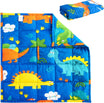
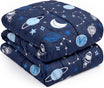
Weighted blankets have become one of the most talked-about sensory tools in recent years — and for good reason. For neurodivergent individuals, anxious children and adults with sleep difficulties, the right weighted blanket can be genuinely life-changing. But with so many options on the market, choosing the right one involves more than just picking a weight. This complete buyer's guide covers everything you need to know before you buy.
How weighted blankets work
Weighted blankets work through a mechanism called deep pressure stimulation (DPS). The gentle, evenly distributed weight mimics the effect of a firm hug, activating the parasympathetic nervous system — the body's rest-and-digest response. This triggers the release of serotonin and melatonin while reducing cortisol, producing a measurable calming effect. Deep pressure stimulation has been used in occupational therapy for decades, and the blanket format simply makes it accessible for everyday home use. The effect is particularly well-documented for autistic individuals and those with ADHD, anxiety and sensory processing disorder, though the calming benefits are reported by neurotypical users too. A 2020 study in the Journal of Clinical Sleep Medicine found significant improvements in insomnia severity and anxiety symptoms among adults who used weighted blankets for 4 weeks.
Choosing the right weight
The most commonly cited guideline is to choose a weighted blanket that is approximately 10% of the user's body weight, plus one or two pounds. For a child weighing 25kg, that suggests a blanket of around 2.5–3kg. For an adult weighing 70kg, a 7–8kg blanket is often recommended as a starting point. However, this is a guideline rather than a rule. Some users, particularly those who are sensory-sensitive or anxious, may find a lighter blanket more manageable initially. Others, particularly sensory-seeking individuals, may prefer a heavier option. If you are buying for a child, it is worth consulting with an occupational therapist before purchasing, particularly if the child has any respiratory or mobility considerations. As a general safety principle, weighted blankets should never be used unsupervised with children under 4 or with anyone who cannot remove the blanket independently.
Materials, fillings and construction
The filling material significantly affects the feel, weight distribution, and washability of a weighted blanket. Glass beads are the most popular premium option — they are small, dense and distribute weight very evenly, making for a smooth, fluid blanket that doesn't rustle. Plastic poly pellets are more affordable and durable but create a slightly bumpier texture and produce a quiet rustling sound that some sensory-sensitive users find irritating. Steel shot beads are the heaviest option per unit of volume, making them useful for achieving higher weights in a thinner blanket. For the outer fabric, consider the user's tactile sensitivities carefully — minky fabric (a soft, plush polyester) is popular for tactile-seeking children, while a smooth cotton cover may be preferable for those who find texture overstimulating. Most quality-weighted blankets come with removable, machine-washable covers, which are essential for day-to-day use.
Weighted blankets for children versus adults
The needs of a child and an adult user differ significantly. For children, safety is the primary consideration — the blanket must be lightweight enough for the child to remove independently and should never cover the head. Look for child-specific designs with smaller dimensions and lower maximum weights. For children with autism, the fabric's sensory properties are particularly important: involve your child in choosing between fabric samples before committing to a purchase. For adults, the focus shifts to daily usability — can the blanket be easily washed? Is it manageable to move around in bed? Some adults prefer to use their weighted blanket as a lap pad during the day rather than a full bed covering, which requires a different size and shape. Single-size lap pads are a more affordable introduction to weighted pressure for adults who are new to the concept.
Summary
A weighted blanket is a meaningful investment in sensory wellbeing — but the right choice depends entirely on the individual using it. Take time to consider weight, material and usage context before buying, and if in doubt, start lighter and size up. At Send Toys To You, our weighted blankets and lap pads are clearly described with weight, filling and fabric details, and our product pages include honest guidance on who each option is best suited for.
🛒 Recommended Products for Your Sensory Corner